Historic Newhaven
Historic Newhaven
People have lived in the Newhaven area for thousands of years. Archaeological finds on Castle Hill include Stone Age flints, Neolithic pottery, and Bronze Age and early Iron Age tools. Fortifications were first built around 400 BC, and during the Roman occupation there may have been a villa, with the Roman road Ermin Street possibly starting at Newhaven.

Saxon and Norman Periods
The Saxons arrived in Sussex in 477 AD and founded the village of Meeching on the banks of the River Ouse. The name “Meeching” derives from the Saxon word meces, meaning “people or camp of the sword.”
Following the Norman Conquest in 1066, St Michael’s Church was built around 1120. Its Norman chancel, tower, and semi-circular apse remain today.
The River and the Harbour
The River Ouse changed course over the centuries. By the 16th century, a storm in 1579 blocked the river’s mouth near Seaford and created a new outlet between Meeching and Seaford. The southern river section was straightened, forming a fixed harbour entrance, the “New Haven,” which gave the town its modern name.
The Gibbons family, local landowners, were still Lords of the Manor of Meeching in the 18th century. Edward Gibbon, author of Decline and Fall of the Roman Empire, was a nephew and reportedly wrote part of his famous work while staying in Newhaven.

Maritime Growth
From 1630, piers were constructed on both sides of the harbour. Newhaven became one of only two fully navigable harbours between the Isle of Wight and Dover, flourishing with shipbuilding, breweries, and trade in oak, wine, spirits, and even Baltic ice stored locally.
A wooden drawbridge across the Ouse was built in 1784, replaced by an iron swing bridge in 1866, and eventually by the modern electrically operated bridge still in use today.
Tide Mills
In 1761, tide-powered flour mills were built between Newhaven and Seaford, creating the village of Tide Mills, which grew to nearly 100 residents. The mills eventually fell into disuse, and the village was abandoned during the Second World War. Today, only foundation walls, a disused railway platform, and Mill Creek remain.
HMS Brazen and Lifeboats
In 1800, HMS Brazen was wrecked beneath Newhaven cliffs, leaving only one survivor. This tragedy prompted the establishment of a lifeboat station in 1803, predating the Royal National Lifeboat Institution. The station celebrated its 200th anniversary in 2003 and remains a vital part of the town’s maritime heritage.
Railways and Ferry Service
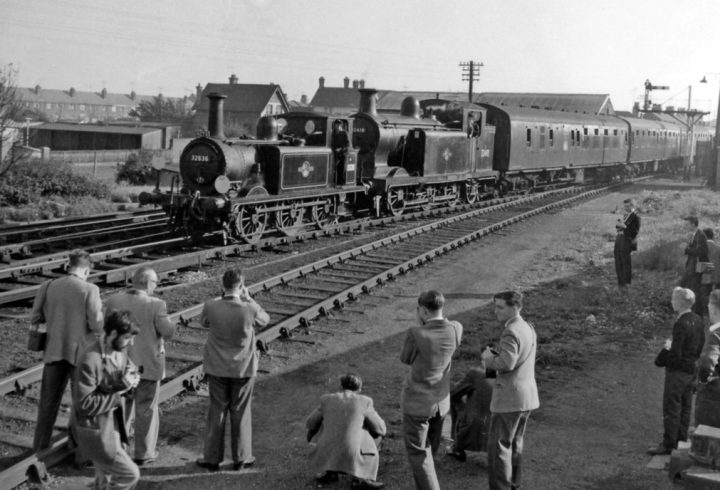
The railway arrived in 1847, and the town established a regular ferry service to Dieppe. The London and Paris Hotel became a famous landmark, surviving for 110 years. Notably, Charles Wells, “the man who broke the bank at Monte Carlo,” stayed locally.
Newhaven Fort
In the 1860s, fearing a French invasion, Lord Palmerston commissioned Newhaven Fort. Built on the cliffs with a dry moat, underground passages, and a 300-man garrison capacity, it served defensive purposes and protected the harbour during both World Wars. Today, it is a popular visitor attraction.
World War I and II
During WWI, Newhaven was a key supply port for France, with over six million tons of material transported. Memorials were later erected in the Memorial Gardens in South Way to honor local soldiers and the Merchant Navy.
During WWII, Newhaven was the launch point for the Dieppe Raid of 1942. The raid was a tactical disaster, with heavy Canadian casualties, but it provided important lessons for future amphibious operations.
A Royal Canadian Engineers memorial was unveiled in 1977 at the Memorial Gardens, marking the Dieppe Raid. Additionally, a secret intelligence centre, HMS Forward, operated underground near Heighton Hill, coordinating radar and communications along the Sussex coast.

In the 1860s, Lord Palmerston—concerned about a possible French invasion—ordered the construction of a fortress to defend Newhaven’s harbour. Building work on Newhaven Fort began in 1864, led by 22-year-old Lieutenant John Ardagh of the Royal Engineers.
Beautifully positioned on the cliff top, the Fort has sweeping views over the harbour and the surrounding coastline. Its natural cliffside defence is strengthened by a dry moat, crossed by a drawbridge, while a network of underground tunnels connects the lunette battery and protective casemates. Enormous underground tanks collected rainwater, ensuring the 300-strong garrison could survive a long siege if needed.
Although the feared invasion never came, Newhaven Fort played an important defensive role in both the First and Second World Wars. Today, it’s open to the public and remains one of the area’s most fascinating and popular historic attractions.

During the First World War, Newhaven was a principal port for the transportation of general supplies and munitions to France. Some 17,000 crossings of the Channel took place and over six million tons of supplies were carried to the French coastal ports. Eleven of the ships were lost to enemy attacks from mines, submarines, aeroplanes or destroyers and about a hundred of the seamen who had become so well known to the local townspeople were killed. Many survivors of the ships were brought back to the port.
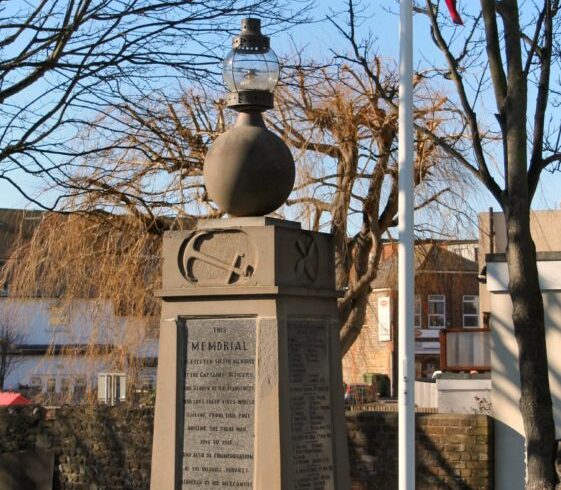
After the Armistice, Newhaven Urban Council created two memorials, both designed by the Council’s Surveyor, Mr C. T. Hooper. One honours the men of Newhaven who lost their lives in the War, while the other pays tribute to the men of the Mercantile Marine who died while sailing to and from the town.
In recent years, the Town Council relocated both memorials to the Memorial Gardens in South Way. This peaceful and dignified setting provides a fitting home for them, and they continue to serve as the focal point of Newhaven’s annual Remembrance Sunday service.
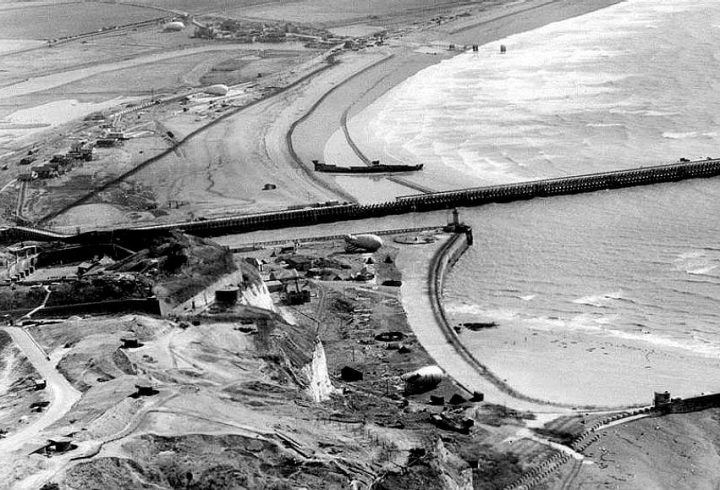
Newhaven played a key role in the Second World War as the departure point for the ill-fated Dieppe Raid on 19th August 1942. The night before, fifty-nine landing craft left Newhaven carrying Canadian troops and No. 3 Commando, later joining vessels from other south coast ports for the crossing to France. The Raid aimed to test new tactics, gather intelligence, and force Germany to strengthen its Channel defences.
Dieppe proved a very poor location for an assault. High cliffs, strong German fortifications, and inaccurate intelligence left the attackers at a severe disadvantage. Tanks struggled on the deep shingle and could not overcome the sea wall. Within hours, around 4,000 men were killed, wounded, or captured, including devastating losses for the Canadian forces.
The Raid remains controversial. Some see it as a tragic and avoidable mistake, while others believe the hard lessons learned helped reduce casualties on D-Day. What is certain is that the price paid at Dieppe was extremely high.
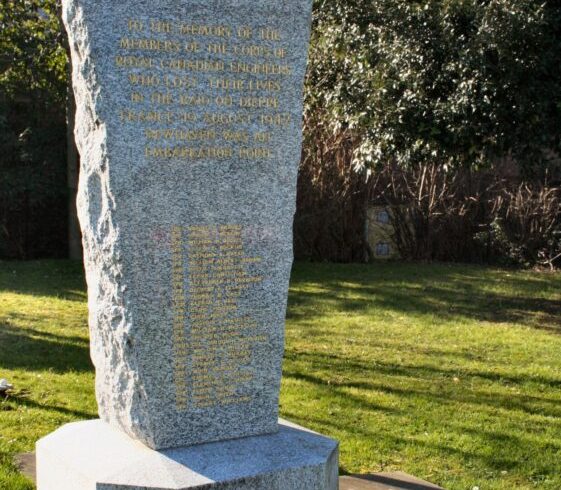
A memorial to the Royal Canadian Engineers who died in the Dieppe Raid was unveiled in the Memorial Gardens on 17th August 1977. Funded by veterans in Sarnia, Ontario, it is now known as the “Canadian” memorial and is the centrepiece of the annual commemoration held each August.
Less well known is HMS Forward, a secret wartime intelligence centre hidden beneath Heighton Hill. Accessible via 120 steps from a nearby holiday home, its tunnel network housed advanced communications equipment linking radar stations along the Sussex coast. The site was abandoned after the war and later attempts to open it to the public were unsuccessful.
Like many UK ports, Newhaven declined in the late twentieth century, but local pride in its maritime heritage remains strong. Today, the town is benefiting from regeneration projects that celebrate its past while looking firmly to the future.

Modern Newhaven and its port remain central to the life of the town, its residents, and the many travellers heading to and from France. The docks now boast daily boat cruises, a new art space, a brewery, a bakery and café, with even more new businesses on the way. With continued regeneration and investment in the town and its infrastructure, there’s plenty to look forward to in the coming years!